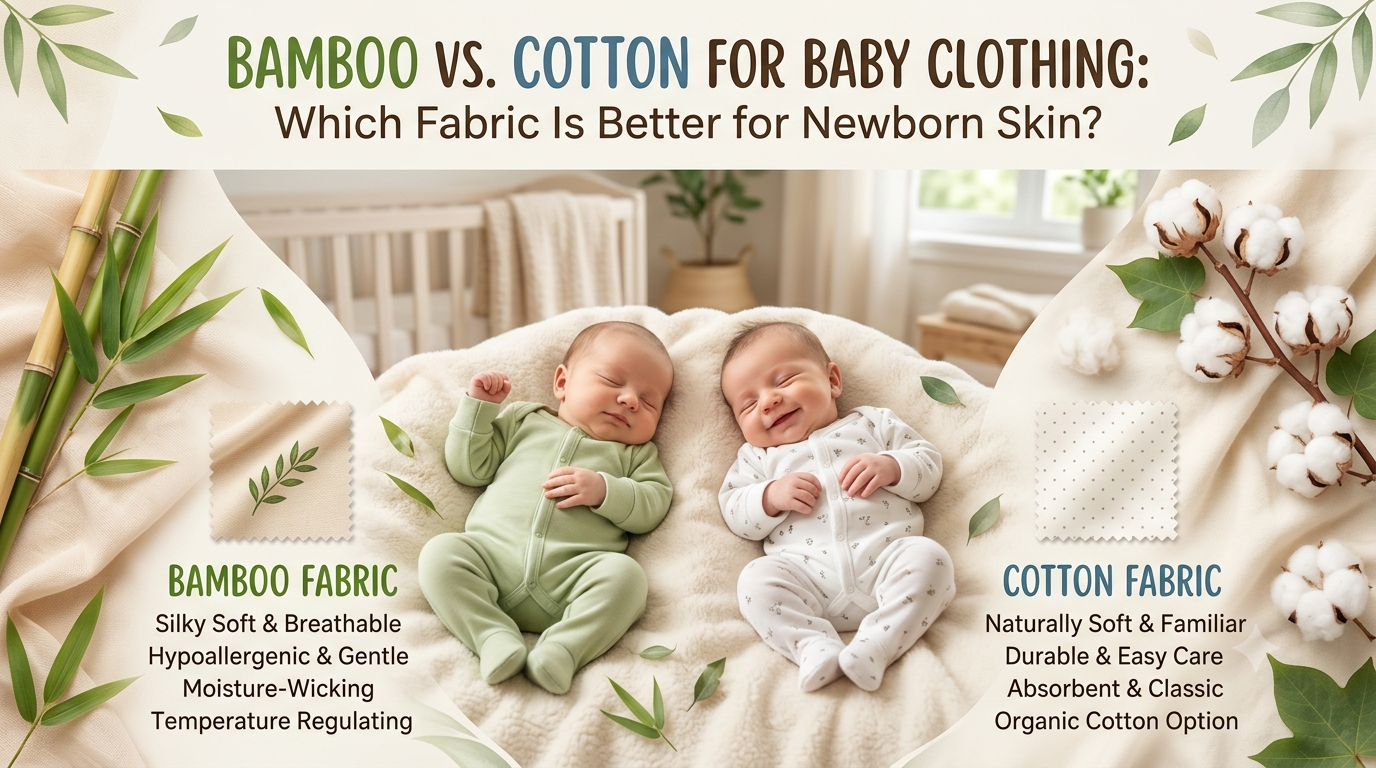
Bamboo vs. Cotton for Baby Clothing: Which Fabric Is Better for Newborn Skin?
Walk into any baby clothing section and you will see two words appearing on labels more than any others: bamboo and cotton. Both are positioned as natural, safe, and premium. Both are marketed to parents who want the best for their newborn's skin. And both are genuinely superior to synthetic alternatives in most respects.
But they are not the same fabric. They perform differently, feel different against the skin, care for differently through washing, and suit different use cases within a newborn's wardrobe. Understanding those differences is not a minor detail. For a baby whose skin is approximately thirty percent thinner than adult skin and significantly more reactive to friction, heat, and chemical residue, fabric choice has real and measurable consequences.
This guide covers exactly what separates bamboo from cotton, where each performs best, what to look for on labels, and how to build a newborn wardrobe that uses both intelligently.
For a range of Oeko-Tex certified organic cotton and bamboo blend baby clothing, visit cottoncraft.shop.
Understanding Newborn Skin and Why Fabric Matters
Before comparing fabrics, it helps to understand what newborn skin actually needs and why it is more vulnerable than most people assume.
Newborn skin has a thinner outer layer, an underdeveloped moisture barrier, and a higher surface-area-to-body-weight ratio than older children or adults. This means it loses moisture more rapidly, absorbs substances from contact more readily, and reacts to friction and irritation more visibly and more quickly.
The practical consequences of this for clothing choice are significant. Fabrics that trap heat cause discomfort and rashes more readily in newborns than in older babies. Chemical finishes that remain on conventionally processed fabric, including formaldehyde-based wrinkle treatments and synthetic dyes, are more likely to cause contact reactions in newborn skin. And fabrics that pill or roughen after washing create friction against skin that has very little tolerance for it.
Both bamboo and organic cotton address these concerns more effectively than synthetic alternatives. The question is which addresses them better in which context.
What Is Bamboo Fabric?
Bamboo fabric is derived from the bamboo plant, but the process of turning bamboo into wearable fibre involves significant chemical processing. The most common form, bamboo viscose or bamboo rayon, is produced by dissolving bamboo pulp using chemical solvents and extruding it into fibre. A less common but more environmentally sound form, bamboo linen, is produced through mechanical processing without the same chemical inputs.
The end result of the viscose process is a soft, lustrous fibre that feels similar to silk against the skin. It is this softness that has made bamboo baby clothing popular, alongside its natural temperature-regulating properties and moisture-wicking capability.
It is worth noting that the environmental claims associated with bamboo as a raw material, including rapid growth without pesticides and high yield per acre, apply to the plant itself but are significantly reduced by the chemical intensity of the viscose production process. Parents drawn to bamboo for environmental reasons should look for certifications that cover the processing stage, not only the raw material.
What Is Organic Cotton?
Organic cotton is cotton grown without synthetic pesticides, herbicides, or genetically modified seeds, and when certified to GOTS or Oeko-Tex standards, processed without the chemical finishes and dyes commonly used in conventional cotton manufacturing.
The result is a fibre that is breathable, durable, and free from the residual chemical treatments that represent the primary concern with conventionally grown and processed cotton. Organic cotton softens progressively with each wash rather than degrading in texture, and it holds its shape and colour reliably through the frequent laundering that newborn clothing requires.
It is the most widely recommended fabric by paediatric dermatologists for newborn skin-contact clothing, particularly for items worn for extended periods such as bodysuits, rompers, and sleepwear.
Bamboo vs. Cotton: Direct Comparison
| Property | Organic Cotton | Bamboo Viscose |
|---|---|---|
| Softness | Soft, improves with washing | Very soft from first use |
| Breathability | Excellent | Good |
| Temperature regulation | Good | Very good |
| Moisture wicking | Moderate | High |
| Durability through washing | Excellent | Moderate |
| Shape retention | Excellent | Moderate |
| Chemical processing | Minimal (if certified) | Significant (viscose process) |
| Certification availability | GOTS, Oeko-Tex | Oeko-Tex (covers processing) |
| Environmental footprint | Low (if certified organic) | Mixed |
| Recommended for sleepwear | Yes | Yes |
| Recommended for daywear | Yes | Yes |
| Cost | Moderate | Moderate to high |
Where Each Fabric Performs Best
Bamboo is better for:
Sleepwear and overnight items where temperature regulation matters most. Bamboo's moisture-wicking properties are particularly valuable at night, when a baby's body temperature can fluctuate and overheating is a recognised concern in infant sleep safety. Its exceptional softness from the first use also makes it well suited to items worn against sensitive skin during sleep.
Warm climate or summer-born babies, where bamboo's breathability and cooling properties provide genuine functional benefit over heavier cotton fabrics.
Organic cotton is better for:
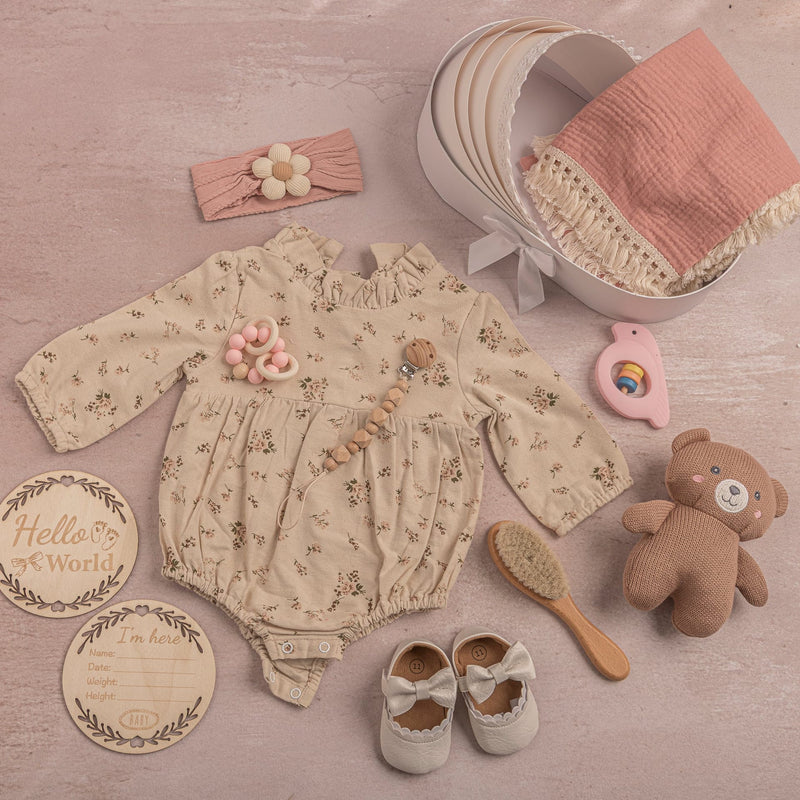
Everyday daywear, including rompers, bodysuits, and outfits worn during active periods, tummy time, and outings. Its durability through repeated washing is superior to bamboo viscose, which can lose shape and texture over time with heavy laundering.
Structured items such as ribbed knit rompers and jumpsuits, where shape retention matters for fit and appearance. Organic cotton knit holds its structure wash after wash in a way that bamboo viscose typically does not.
Gift items, where the long-term durability of the fabric contributes to overall value. A well-made organic cotton outfit can be worn by multiple children over several years.
Cotton Craft's Tiny Trendy Outfits collection at cottoncraft.shop/collections/baby-outfits is built around certified organic cotton in ribbed knit and woven constructions, chosen specifically for their durability, softness, and performance through repeated washing.
What to Look for on Labels
Fabric composition labels tell part of the story but not all of it. A label that reads "100% bamboo" does not confirm the production process was chemical-free. A label that reads "organic cotton" does not confirm it was processed without harmful finishes unless it carries a recognised certification.
Certifications worth trusting:
Oeko-Tex Standard 100 confirms that the finished product has been tested for harmful substances and found safe for skin contact. This applies regardless of whether the fabric is bamboo or cotton and covers chemical residues from both growing and processing stages.
GOTS, the Global Organic Textile Standard, applies specifically to organic cotton and covers the entire production chain from fibre to finished garment. It is the most comprehensive certification available for cotton.
A bamboo or cotton product without either certification offers no verified assurance about the chemical inputs used in its production, regardless of how it is marketed.
Building a Wardrobe That Uses Both Intelligently
The most effective approach to newborn clothing is not a strict commitment to one fabric over the other. It is using each where it performs best.
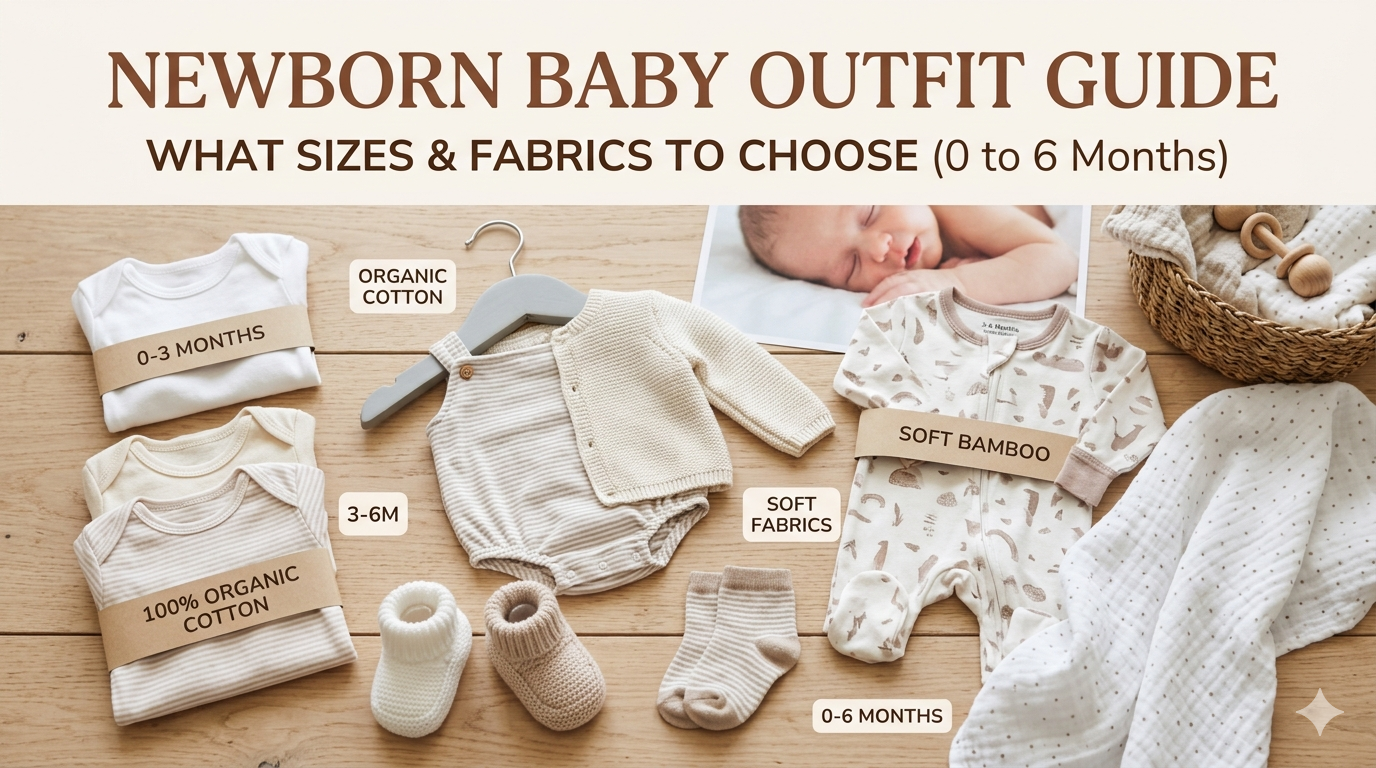
A practical wardrobe for 0 to 6 months might include organic cotton for daytime rompers, bodysuits, and outfits where durability and shape retention matter, bamboo blend for sleepwear and overnight items where temperature regulation and softness are the priority, and Oeko-Tex certified versions of both across all categories to ensure consistent safety standards regardless of fabric type.
For gifting purposes, organic cotton in certified knit constructions tends to deliver superior long-term value and is the more versatile default. Cotton Craft's full range of organic newborn essentials, including certified clothing, swaddles, and gift sets, can be explored.
Frequently Asked Questions
Is bamboo or cotton better for newborn skin?
Both are superior to synthetic fabrics. For everyday daywear and items requiring durability through frequent washing, organic cotton is the stronger choice. For sleepwear and temperature-sensitive use cases, bamboo's moisture-wicking properties offer a specific advantage. Oeko-Tex certification matters more than the fabric choice itself in terms of chemical safety.
Is bamboo fabric safe for newborns?
Bamboo viscose produced through standard chemical processing is generally safe when the finished product carries Oeko-Tex Standard 100 certification, which confirms harmful substance testing. Without certification, the safety of residual processing chemicals cannot be verified.
Does bamboo baby clothing last as long as cotton?
Generally, no. Bamboo viscose tends to lose shape and texture more quickly through repeated high-temperature washing than well-made organic cotton. For items expected to be worn by multiple children over several years, organic cotton in a quality knit construction is the more durable option.
What should I look for when buying baby clothing?
Oeko-Tex Standard 100 or GOTS certification, natural fibre content of at least 95 percent, sizing in 0 to 3 months as a default for gifting, and a construction suited to the item's primary use, ribbed knit for daywear rompers, softer weaves for sleepwear.
Where can I find Oeko-Tex certified organic cotton baby clothing?
Cotton Craft offers a full range of Oeko-Tex certified organic cotton and bamboo blend baby clothing, including rompers, jumpsuits, and outfit sets in 0 to 6 month sizing. Free shipping on orders over $50. A free personalized gift card included with every order.
Final Thoughts
Bamboo and cotton are not competing answers to the same question. They are complementary materials that each perform best in specific contexts. Understanding which to reach for and when, and ensuring whatever you choose carries a recognised certification, is the practical upshot of everything in this guide.
For newborn clothing built around exactly these principles, explore Cotton Craft's certified organic collection at cottoncraft.shop. Free shipping on orders over $50. A free personalized gift card with every purchase.
About Cotton Craft
Cotton Craft is a luxury baby gifting brand founded by a mother of two, based in Lexington, Kentucky. Every product is Oeko-Tex certified, crafted from organic cotton and bamboo, and trusted by over 100,000 families and corporate gifting teams at Fortune 500 companies across the United States. Visit cottoncraft.shop to explore the full collection.