Newborn Baby Outfit Guide: What Sizes and Fabrics to Choose for 0 to 6 Months
Few things catch new parents off guard as quickly as baby clothing sizing. A drawer full of carefully chosen newborn outfits, gifted with love before the birth, often goes almost entirely unused because the baby simply never fits into them. Meanwhile, the fabric choices made in these earliest months matter more than most people realise, with direct consequences for comfort, skin health, and how often an outfit actually gets reached for.
This guide breaks down exactly what sizes to buy, when babies typically move through each size, which fabrics are worth prioritising, and how to build a 0 to 6 month wardrobe that gets used rather than stored.
For a curated range of organic cotton newborn outfits designed around these exact principles, visit cottoncraft.shop.
Why Newborn Sizing Is So Often Wrong
The label "Newborn" or "0 to 1 month" creates a false sense of precision. In practice, average birth weight varies considerably, and a significant proportion of babies are born already too large for this size, or grow out of it within the first one to two weeks.
This is why so many new parents report that the newborn-sized clothing they received as gifts went almost entirely unworn. It is not a reflection of the gift's quality or thoughtfulness. It is simply a mismatch between how sizing is labelled and how babies actually grow.
Understanding this mismatch is the single most useful piece of information for anyone buying baby clothing, whether for their own child or as a gift.
Newborn Sizing Breakdown by Age and Weight
| Size Label | Typical Age Range | Typical Weight Range | Usable Window |
|---|---|---|---|
| Newborn (0 to 1 month) | Birth to 4 weeks | Up to 8 lbs | 1 to 3 weeks |
| 0 to 3 months | Birth to 3 months | 8 to 12.5 lbs | 6 to 10 weeks |
| 3 to 6 months | 3 to 6 months | 12.5 to 17 lbs | 8 to 12 weeks |
| 6 to 9 months | 6 to 9 months | 17 to 20 lbs | 8 to 10 weeks |
The takeaway from this table is straightforward. The 0 to 3 month size offers the longest realistic usable window relative to the newborn size, and is the safer default for gift-giving in particular, since the giver typically has no way of knowing the baby's birth weight in advance.
What Fabrics to Choose for 0 to 6 Months
Fabric choice matters more in the first six months than at almost any other stage of a child's life. Newborn skin is approximately thirty percent thinner than adult skin, has an underdeveloped moisture barrier, and is significantly more reactive to friction, chemical residue, and temperature changes.
Organic Cotton
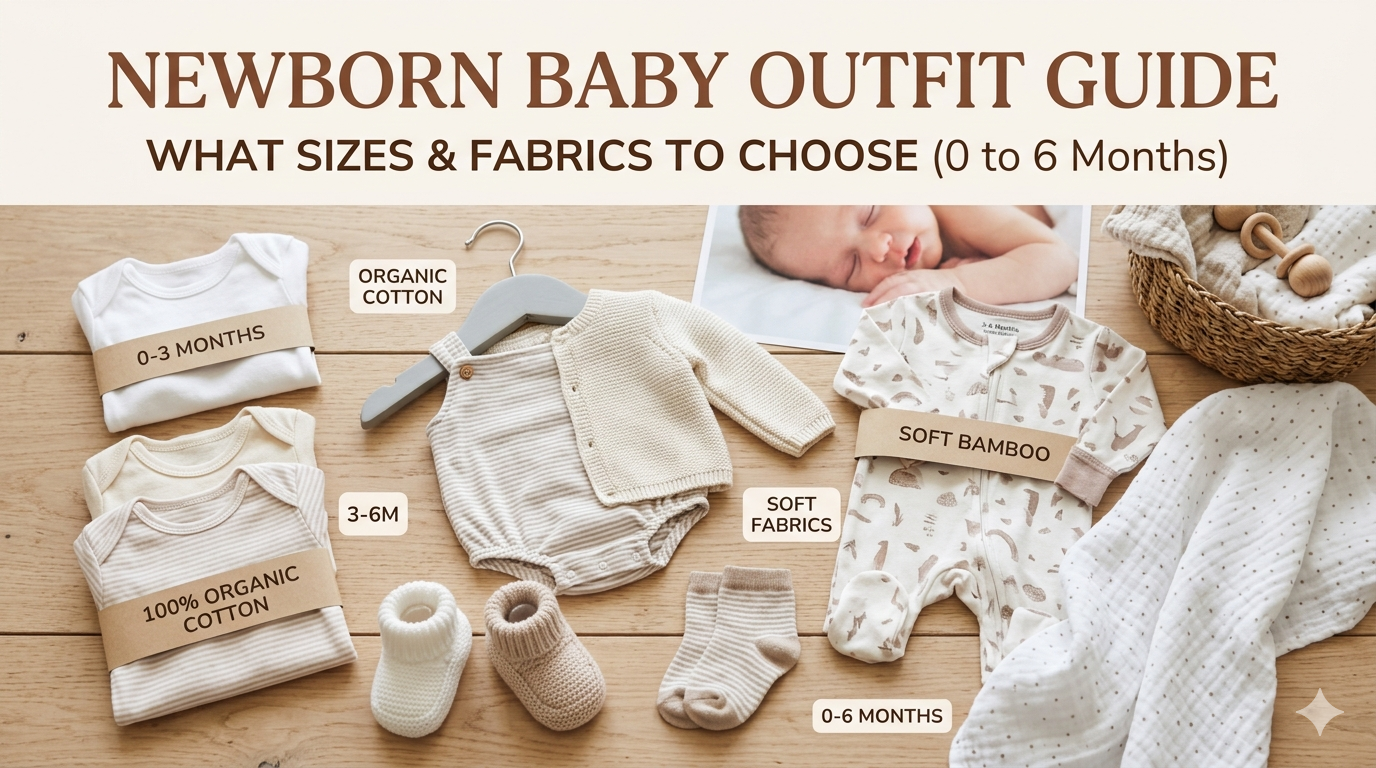
Organic cotton is the gold standard for newborn clothing. It is breathable, soft from the first wash, and when certified to GOTS or Oeko-Tex standards, free from the chemical residues commonly found in conventionally processed cotton, including formaldehyde-based finishes and azo dyes.
Organic cotton is particularly well suited to bodysuits, rompers, and sleepwear, where the fabric sits directly against the skin for extended periods.
Ribbed Cotton Knit
Ribbed knit fabric has become one of the most popular choices for newborn rompers and jumpsuits, and for good reason. The ribbed structure provides natural stretch without requiring elastane or synthetic stretch fibres, which means it moves with a baby's body during nappy changes and tummy time while remaining breathable.
It also tends to hold its shape and colour better through repeated washing than plain jersey, which matters significantly given how frequently newborn clothing needs laundering.
Muslin Cotton
Muslin is a lightweight, loosely woven cotton fabric that becomes progressively softer with every wash. While most commonly associated with swaddle blankets, muslin is increasingly used in lightweight layering pieces and sleepwear for warmer climates or summer births, where breathability is the primary concern.
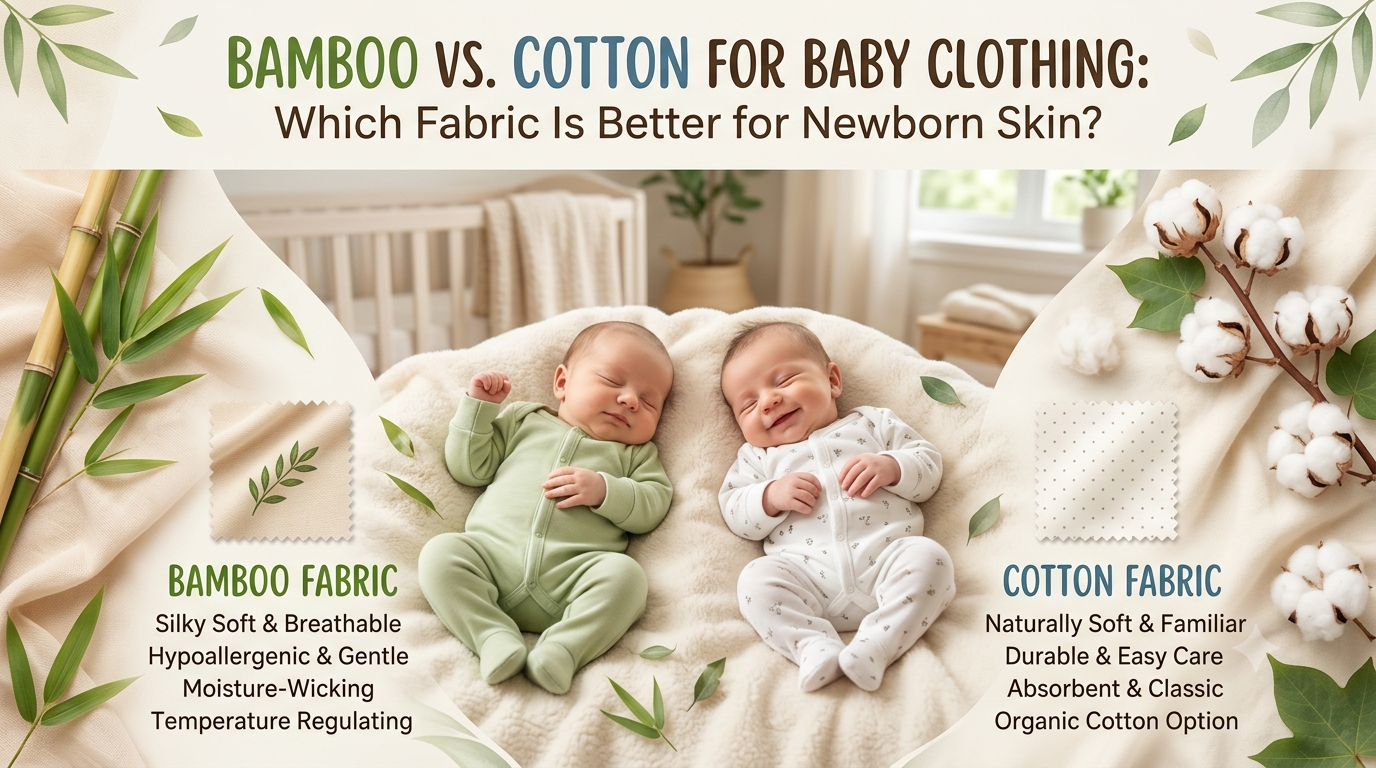
Bamboo Blend
Bamboo-derived fabric, when blended with organic cotton, offers a notably soft hand feel and natural temperature regulation, making it a popular choice for sleepwear and items worn overnight. It is worth noting that bamboo fabric production processes vary considerably, so certification matters here as much as it does with cotton.
What to Avoid
Synthetic blends containing polyester, nylon, or elastane in high percentages should generally be avoided for items in direct, prolonged skin contact, particularly sleepwear and bodysuits. These fabrics trap heat, do not breathe effectively, and are more likely to retain chemical finishes from manufacturing.
Heavily embellished items, including those with sequins, hard appliques, or decorative buttons, present both a comfort issue, since these elements often press against delicate skin during sleep or feeding, and a safety consideration for very young infants.
Building a 0 to 6 Month Wardrobe That Actually Gets Used

The most common mistake in newborn wardrobe planning is breadth without depth. A wardrobe with fifteen different outfits in newborn size, each worn once or never, is less useful than five or six versatile pieces in 0 to 3 and 3 to 6 month sizing that get worn repeatedly.
A practical core wardrobe for the 0 to 6 month period typically includes several long-sleeve bodysuits in organic cotton for layering, two or three ribbed knit rompers for daytime wear, one or two cotton jumpsuits with matching hats for outings and photographs, a small number of sleepwear pieces in breathable muslin or bamboo blend, and one or two slightly dressier outfits in 3 to 6 month sizing for occasions, since babies tend to reach this size around the point when they begin attending more social events.
Cotton Craft's Tiny Trendy Outfits collection, available at cottoncraft.shop/collections/baby-outfits, is built around exactly this principle, with rompers, jumpsuits, and sets designed in 0 to 6 month sizing using organic cotton and ribbed knit fabrics.
One standout piece worth highlighting is the SnuggleKnit Baby Romper, sized for 0 to 6 months and available in three colours, made from a soft ribbed cotton knit that has become one of the most repeatedly worn pieces reported by parents who own it, precisely because it fits the criteria above: versatile sizing, breathable fabric, and a design simple enough to wear every day.
Case Study: The Wardrobe That Was Never Worn
A first-time mother in Denver received eleven newborn-sized outfits as gifts before her son was born. He arrived at 8 lbs 12 oz, already above the typical newborn size range. By the time he came home from the hospital two days later, none of the newborn-sized items fit.
Of the eleven items, two were eventually worn once each during a brief period around the two-week mark when his weight briefly aligned with the upper end of newborn sizing. The remaining nine were donated unworn.
By contrast, three outfits she had purchased herself in 0 to 3 month ribbed cotton knit were worn in rotation for nearly two months, each washed and reworn more than twenty times.
The lesson from this case, which mirrors a pattern reported repeatedly across new parent communities, is that sizing decisions have a far greater impact on whether a gift gets used than the quality or styling of the item itself. A beautifully designed newborn-sized outfit that never fits delivers zero value, while a simple, well-made 0 to 3 month piece in breathable fabric can be worn dozens of times.
Frequently Asked Questions
What size should I buy for a newborn gift if I do not know the baby's birth weight?
0 to 3 months is the safer default. It accommodates a wider range of birth weights and offers a significantly longer usable window than newborn-sized items, which a meaningful proportion of babies never fit into at all.
Is organic cotton worth the extra cost for baby clothes?
For items in direct, prolonged skin contact, including bodysuits and sleepwear, yes. Certified organic cotton avoids the chemical residues commonly present in conventionally processed cotton and tends to soften and hold up better through the frequent washing newborn clothing requires.
How many outfits does a newborn actually need?
Fewer than most people assume, but in the right sizes. A core wardrobe of six to eight versatile pieces across 0 to 3 and 3 to 6 month sizing, in breathable fabrics, will see far more use than a larger collection skewed toward newborn sizing.
What fabric is best for newborn sleepwear?
Breathable, natural fabrics such as organic cotton, muslin cotton, or bamboo blend are preferable for sleepwear, as they regulate temperature effectively and reduce the risk of overheating, which is a recognised consideration in infant sleep safety guidance.
When should I size up to 6 to 9 months?
Most babies move into 6 to 9 month sizing between roughly five and seven months of age, though this varies considerably by individual growth rate. Keeping a close eye on how snugly current items fit, rather than relying purely on the baby's age, is the more reliable indicator.
Final Thoughts
Newborn clothing sizing is one of the most quietly confusing aspects of preparing for a baby, and the consequences of getting it wrong are not dramatic, but they are wasteful. Outfits go unworn. Money and thought go unused. Choosing 0 to 3 month sizing as a default, prioritising breathable organic fabrics, and focusing on fewer, more versatile pieces produces a wardrobe that actually gets worn, washed, and worn again.
Explore Cotton Craft's full range of organic newborn outfits at cottoncraft.shop. Free shipping on orders over $50. A free personalized gift card included with every order.
About Cotton Craft
Cotton Craft is a luxury baby gifting brand founded by a mother of two, based in Lexington, Kentucky. Every product is Oeko-Tex certified, crafted from organic cotton and bamboo, and trusted by over 100,000 families and corporate gifting teams at Fortune 500 companies across the United States. Visit cottoncraft.shop to explore the full collection.